En la construcción de carreteras, proyectos residenciales y desarrollo de infraestructuras, un suministro fiable de hormigón es esencial para garantizar la eficiencia de la construcción y controlar los costes. Sin embargo, los métodos tradicionales de suministro de hormigón pueden resultar complicados en zonas remotas, proyectos pequeños y obras móviles debido a los elevados costes de transporte y la limitada flexibilidad.
Una hormigonera autocargable integra las funciones de carga, pesaje, mezcla, transporte y descarga en una sola máquina, lo que permite la producción de hormigón directamente en obra. Esta guía le ayudará a elegir el modelo de hormigonera autocargable adecuado según los requisitos de su proyecto, los escenarios de aplicación y el rendimiento del equipo.
Una hormigonera autocargable no es la única opción para todos los proyectos de construcción, pero puede proporcionar mayor flexibilidad y rentabilidad en los siguientes casos.
En la construcción de carreteras rurales, proyectos de montaña, zonas mineras y proyectos de infraestructura en lugares remotos, las obras suelen estar ubicadas lejos de las zonas urbanas.
Depender de proveedores externos de hormigón puede tener como resultado:
Una hormigonera autocargable puede cargar las materias primas y producir hormigón directamente en la obra, reduciendo la dependencia de las plantas de dosificación fijas.
Es especialmente adecuado para:
Algunos proyectos de construcción no se limitan a una única ubicación fija, como por ejemplo:
Los métodos tradicionales de suministro de hormigón requieren el transporte continuo de hormigón premezclado, mientras que las plantas de dosificación fijas no pueden adaptarse fácilmente a los cambios en la ubicación de las obras.
Una hormigonera autocargable ofrece una excelente movilidad, lo que permite a los operarios ajustar la ubicación de trabajo según el progreso del proyecto y producir hormigón rápidamente en diferentes áreas.
Para las empresas que requieren soluciones de construcción flexibles, este equipo puede reducir los costos de transporte y de programación de equipos, al tiempo que mejora la eficiencia general.
En proyectos de construcción pequeños y medianos, la demanda diaria de hormigón puede variar según la fase de construcción.
Algunos ejemplos son:
La construcción de una planta de dosificación fija de gran tamaño puede resultar en una baja utilización de los equipos y una inversión innecesaria.
Una hormigonera autocargable permite a los operarios producir la cantidad de hormigón necesaria en función de las necesidades reales de la construcción, lo que ayuda a:
A la hora de elegir equipos para la producción de hormigón, las empresas suelen necesitar comparar las diferencias entre las soluciones de producción de hormigón in situ y los métodos tradicionales de suministro de hormigón.
Factor de comparación | Hormigonera autocargable | Suministro tradicional de hormigón |
Método de producción | Produce hormigón directamente en la obra. | Depende de proveedores externos de hormigón. |
Requisitos del equipo | Una sola máquina integra múltiples funciones. | Se requieren cargadoras, equipos de mezcla y vehículos de transporte. |
Flexibilidad en la construcción | Alta movilidad y operación flexible en el sitio | Limitado por la ubicación de los suministros y las condiciones de transporte. |
Idoneidad para zonas remotas | Gran adaptabilidad | Mayores costos de transporte |
Control del suministro de hormigón | Produce hormigón según las necesidades reales del proyecto. | Depende de los horarios y la disponibilidad del proveedor. |
Para proyectos con obras dispersas, infraestructuras limitadas o la necesidad de una respuesta rápida, una hormigonera autocargable suele ser una solución de producción de hormigón más flexible y eficiente.
Al elegir una hormigonera autocargable, el precio no es el único factor a considerar. La envergadura del proyecto, las condiciones de trabajo y la frecuencia de uso del equipo también influyen en la decisión final.
Durante el proceso de compra, los compradores deben centrarse en los siguientes tres aspectos:
La demanda de hormigón es uno de los factores más importantes a la hora de seleccionar la capacidad de los equipos.
Para proyectos con menores requerimientos de concreto, obras dispersas o traslados frecuentes de equipos, una hormigonera autocargable compacta suele ofrecer mayor flexibilidad y movilidad.
Para proyectos como la construcción de carreteras y el desarrollo de infraestructuras que requieren un suministro continuo de hormigón, se debe considerar la posibilidad de utilizar equipos con mayor capacidad de producción para reducir los ciclos de mezclado y mejorar la eficiencia de la construcción.
A la hora de seleccionar la capacidad adecuada, se recomienda evaluar conjuntamente la demanda diaria de hormigón, la duración del proyecto y la frecuencia de construcción.
Las condiciones de la obra influyen directamente en la idoneidad del equipo.
Si el área de trabajo es limitada, las condiciones de la carretera son complejas o el equipo necesita ser movido con frecuencia, un modelo compacto y de gran maniobrabilidad suele ser una mejor opción.
Para proyectos de construcción a gran escala, especialmente aquellos que requieren vertido continuo o suministro estable de hormigón, se debe dar prioridad a los equipos con mayor eficiencia de producción y capacidad de funcionamiento continuo.
La maquinaria de construcción es una inversión a largo plazo. Además del precio de compra inicial, los compradores también deben considerar los costos operativos totales del equipo.
Elegir una máquina integrada que combine las funciones de carga, mezcla y transporte puede reducir la necesidad de equipos adicionales, a la vez que disminuye los costes de mano de obra y mantenimiento.
Al mismo tiempo, la disponibilidad de repuestos y el servicio de asistencia posventa del proveedor también son factores importantes a tener en cuenta durante el proceso de compra.
Para satisfacer las necesidades de diferentes proyectos de construcción, LTMG ofrece una gama de soluciones de mezcladoras de hormigón autocargables, ayudando a los clientes a seleccionar el modelo adecuado en función de su entorno de trabajo y sus requisitos de producción de hormigón.
Para proyectos con espacio de trabajo limitado, ubicaciones de construcción dispersas o reubicación frecuente de equipos, una hormigonera autocargable compacta y de gran maniobrabilidad puede proporcionar una mayor adaptabilidad y eficiencia.
La hormigonera autocargable LTMG26 para proyectos de construcción está diseñada para aplicaciones de construcción de pequeña y mediana envergadura. Cuenta con una capacidad de mezcla de 2,6 m³ por lote y puede completar hasta 4 ciclos de mezcla por hora, alcanzando una producción máxima de aproximadamente 10,4 m³/h para satisfacer las necesidades diarias de suministro de hormigón.
La LTM26 tiene un peso operativo de aproximadamente 7000 kg y unas dimensiones de 7150 mm × 2650 mm × 3000 mm. Su diseño compacto la hace especialmente adecuada para obras con espacio limitado o proyectos que abarcan varias ubicaciones.
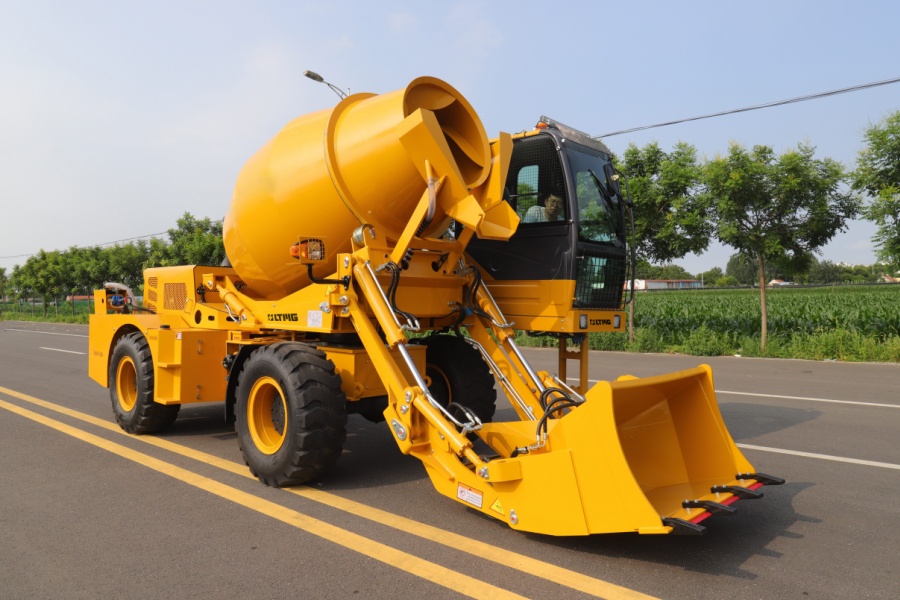
La principal ventaja de la LTM26 es su flexibilidad. La máquina integra las funciones de carga, mezcla, transporte y descarga en una sola unidad, eliminando la necesidad de cargadoras y equipos de transporte adicionales y reduciendo el número de máquinas necesarias en la obra.
Además, el equipo cuenta con dirección articulada hidráulica y una capacidad máxima de ascenso de 40°, lo que le permite adaptarse a condiciones de trabajo exigentes. El tambor mezclador permite una rotación horizontal de 270°, facilitando la descarga del hormigón en diferentes posiciones y mejorando la comodidad de operación en obra.
Para clientes con una demanda moderada de hormigón y ubicaciones de construcción que cambian con frecuencia, la hormigonera autocargable LTMG26 ofrece un equilibrio ideal entre productividad y flexibilidad.
En la construcción de carreteras, proyectos de infraestructura y aplicaciones de construcción a gran escala que requieren un suministro continuo de hormigón, la productividad de los equipos y la capacidad de funcionamiento continuo adquieren una importancia cada vez mayor.
La hormigonera autocargable LTMG42 de 4,2 m³ tiene una capacidad de mezcla de 4,2 m³ por lote y puede completar hasta 5 ciclos de mezcla por hora, alcanzando una producción máxima de aproximadamente 20 m³/h. Está diseñada para proyectos de construcción con mayores exigencias en cuanto a la eficiencia del suministro de hormigón.
La LTM42 tiene un peso operativo de aproximadamente 9.500 kg y unas dimensiones de 7.500 mm × 2.950 mm × 3.500 mm. En comparación con los modelos compactos, ofrece una mayor capacidad de producción y es más adecuada para operaciones de construcción continuas y de larga duración.
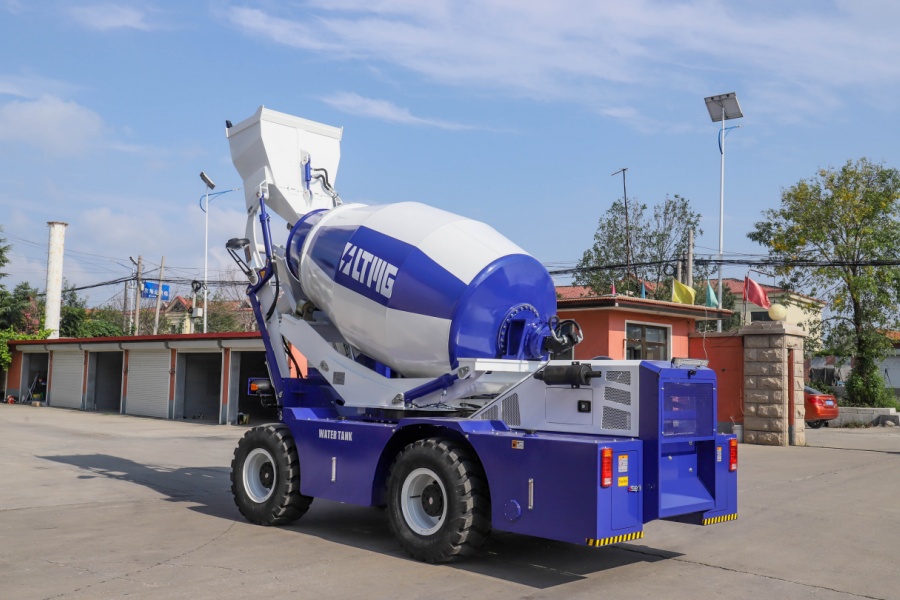
La LTM42 está equipada con un sistema automático de carga, pesaje y mezcla, que reduce las operaciones manuales y mejora la eficiencia de la producción de hormigón en obra. Incorpora un motor diésel Yuchai YCD4P22T de 125 CV con una potencia nominal de 91 kW y tracción a las cuatro ruedas. Con una capacidad máxima de ascenso de 45°, puede desenvolverse en una amplia gama de entornos de construcción exigentes.
Además, el tambor mezclador admite una rotación de 270° y la altura de descarga alcanza los 2,2 m, lo que mejora la comodidad de descarga en diferentes lugares de construcción.
Para proyectos que requieren un suministro estable de hormigón y una mayor eficiencia en la construcción, la hormigonera autocargable LTMG42 ofrece una mayor productividad y una capacidad de funcionamiento continuo más robusta.
Una hormigonera autocargable integra las funciones de carga, mezcla, transporte y descarga en una sola máquina, lo que proporciona una solución de suministro de hormigón más flexible y eficiente para los proyectos de construcción modernos.
La elección del equipo adecuado requiere una consideración integral de la envergadura del proyecto, las necesidades específicas, las condiciones de trabajo y los requisitos operativos a largo plazo. El modelo idóneo no solo satisface las necesidades de construcción, sino que también ayuda a las empresas a mejorar la productividad y reducir los costos operativos.
Si está buscando una hormigonera autocargable adecuada para su proyecto de construcción, la Equipo LTMG Podemos ofrecerle asesoramiento profesional para la selección de equipos y soluciones personalizadas según sus necesidades específicas. Contáctenos hoy mismo para obtener más información sobre nuestros productos y un presupuesto.

Teléfono : +86 195 5920 7570
Correo electrónico : market@ltmg.com
Whatsapp : +86 195 5920 7570
Agregar : LTMG Group, Electronics City(Xiamen) International Innovation Center, No.23, Duiying Road, Jimei District, Xiamen, China


Obtenga la información más reciente sobre productos e información sobre ofertas



