Blog
  • Selecting the Right Road Roller Tonnage: A Strategic Guide for Construction Efficiency
    Selecting the Right Road Roller Tonnage: A Strategic Guide for Construction Efficiency Feb 20, 2026
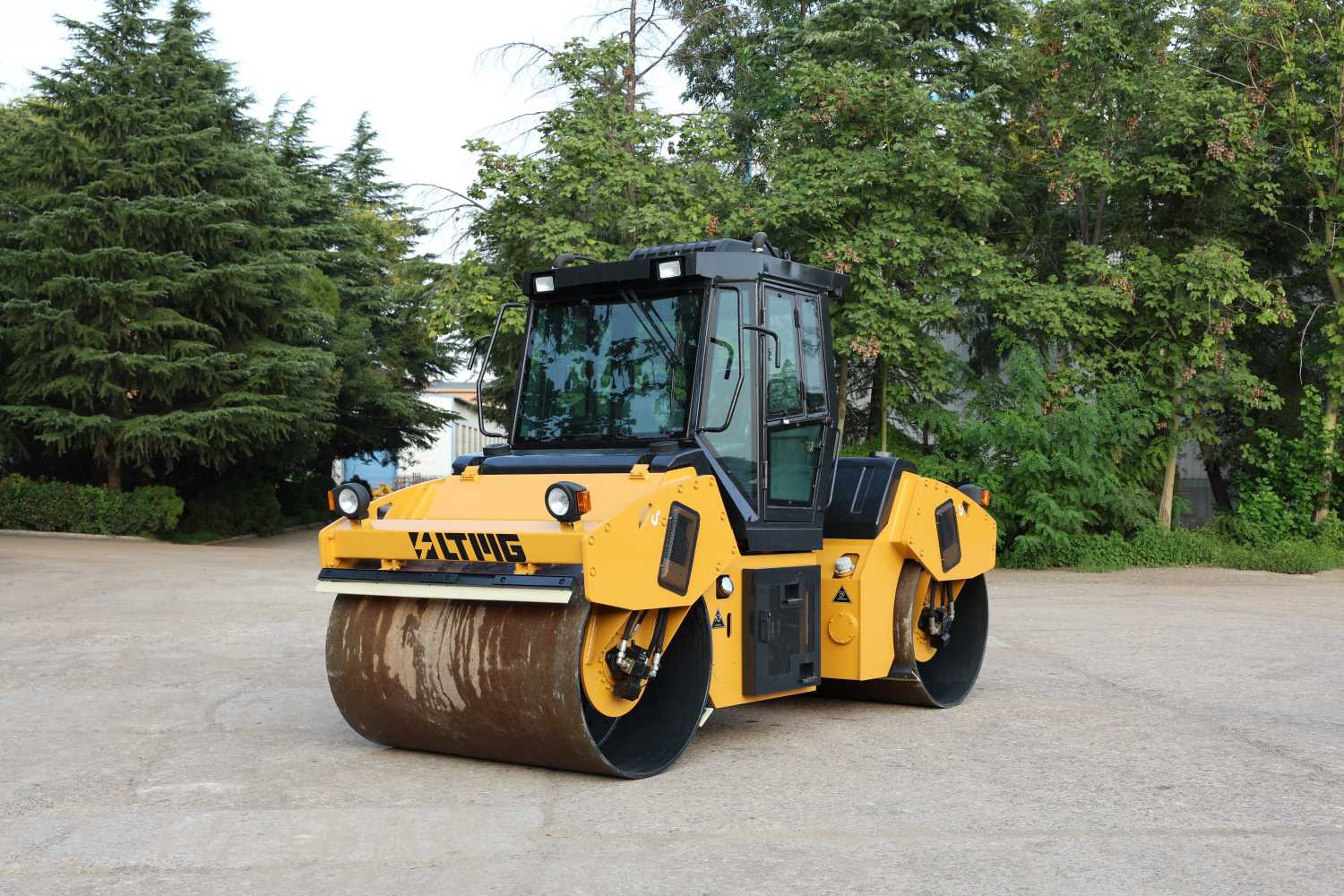
    1. Why Tonnage is the Critical Factor in Compaction In the world of earthworks and paving, the weight of your construction machine isn't just a number—it is the primary driver of soil density and surface integrity. Choosing the wrong tonnage leads to two costly extremes: Tonnage Too Small: Results in under-compaction, high air voids, and subsequent structural failure, leading to expensive rework. Tonnage Too Large: Increases fuel and transport costs and risks "over-compacting" or crushing the aggregate, which can compromise the material's load-bearing capacity. The Professional Insight: Correct tonnage is the intersection of compaction depth, centrifugal force, and material type. While static weight provides the "kneading" effect, the dynamic force of a vibratory roller allows for deeper influence. To achieve peak efficiency, you must match the machine’s total applied force to the specific lift thickness of your project. 2. Tonnage Recommendations by Project Type   Selecting a roller based on the scope of the project ensures you aren't overpaying for power you don't use or under-performing on critical tasks. 2.1 Small-Scale Municipal & Landscaping (1–3 Tons) Best For: Sidewalks, residential driveways, garden paths, and patch repairs. Strategic Advantage: These compact models offer exceptional maneuverability in tight urban spaces. They are easy to transport via light trailers and are optimized for thin-layer compaction, where larger machines might damage surrounding curbs or structures. 2.2 Commercial Projects & Urban Roadways (4–10 Tons) Best For: Parking lots, city streets, and secondary roads. Strategic Advantage: This "utility" class provides the perfect balance between compaction power and mobility. A 7-ton or 8-ton vibratory roller is often the "goldilocks" solution for contractors who need a versatile machine capable of handling both sub-base soil and asphalt top coats. 2.3 Highways & Large Infrastructure (12 Tons and Above) Best For: Expressways, airport runways, dam foundations, and massive industrial pads.   Strategic Advantage: These heavy-duty machines are designed for deep-layer compaction and high-volume output. They deliver the massive centrifugal force required to stabilize thick lifts of rock fill or heavy clay, ensuring the foundation meets stringent engineering tolerances. 3. Material Science: How Substrate Dictates Tonnage A professional procurement decision must account for the "Compaction Formula": Material Type + Lift Thickness = Required Tonnage. Soil & Clay Sub-bases: These require high amplitude and significant weight to overcome the internal friction of the soil. A heavier roller is usually preferred. Granular & Gravel Layers: These materials respond best to high-frequency vibration. Moderate tonnage with a high-performance vibratory system is ideal to settle the aggregate without crushing the stones. Asphalt Surface Courses: Here, the focus shifts to surface smoothness. While weight is needed for density, the machine must be agile enough to avoid "shoving" the hot mix. 4. Common Selection Pitfalls to Avoid Based on years of field feedback, avoid these three common mistakes: Ignoring Vibration Specs: Two 10-ton rollers can have vastly different compaction outputs. Always look at the frequency (Hz) and amplitude (mm) alongside the static weight. Overlooking Site Constraints: A 20-ton machine is useless if the site entrance or the bridge leading to the site has a 15-ton limit. Undersizing to Save Budget: Buying a smaller machine to save on upfront costs often backfires through increased labor hours and excessive fuel consumption as the machine struggles to reach the required density. 5. Final Decision Framework & Expert Consultation Before you finalize your next construction machine acquisition, follow these steps: Define the primary material (Soil, Gravel, or Asphalt). Calculate the maximum lift thickness (compacted layer depth). Evaluate the total area to be covered to determine required productivity rates. Build Your Fleet with LTMG Quality At LTMG, we understand that your project's success rests on the reliability of your equipment. Our range of vibratory rollers—from agile 1-ton municipal units to 20-ton infrastructure giants—is engineered for extreme durability and precision compaction. Featuring advanced hydraulic systems and ergonomic controls, LTMG road rollers are designed to maximize your ROI by reducing cycle times and maintenance overhead. Take the Next Step in Construction Excellence. Don't leave your compaction quality to chance. Contact the LTMG technical team today to receive a customized equipment assessment and a competitive quote tailored to your 2026 project pipeline.  

DEJA UN MENSAJE

dejar un mensaje
Si está interesado en nuestros productos y desea conocer más detalles, deje un mensaje aquí, le responderemos tan pronto como podamos.
entregar
VER MÁS

Horas de servicio

LTMG ofrece un servicio de respuesta en línea las 24 horas

Por favor contáctenos si necesita ayuda

Responderemos lo antes posible

CONTÁCTENOS #
+86 195 5920 7570

Hogar

productos

Whatsapp

Contacto

