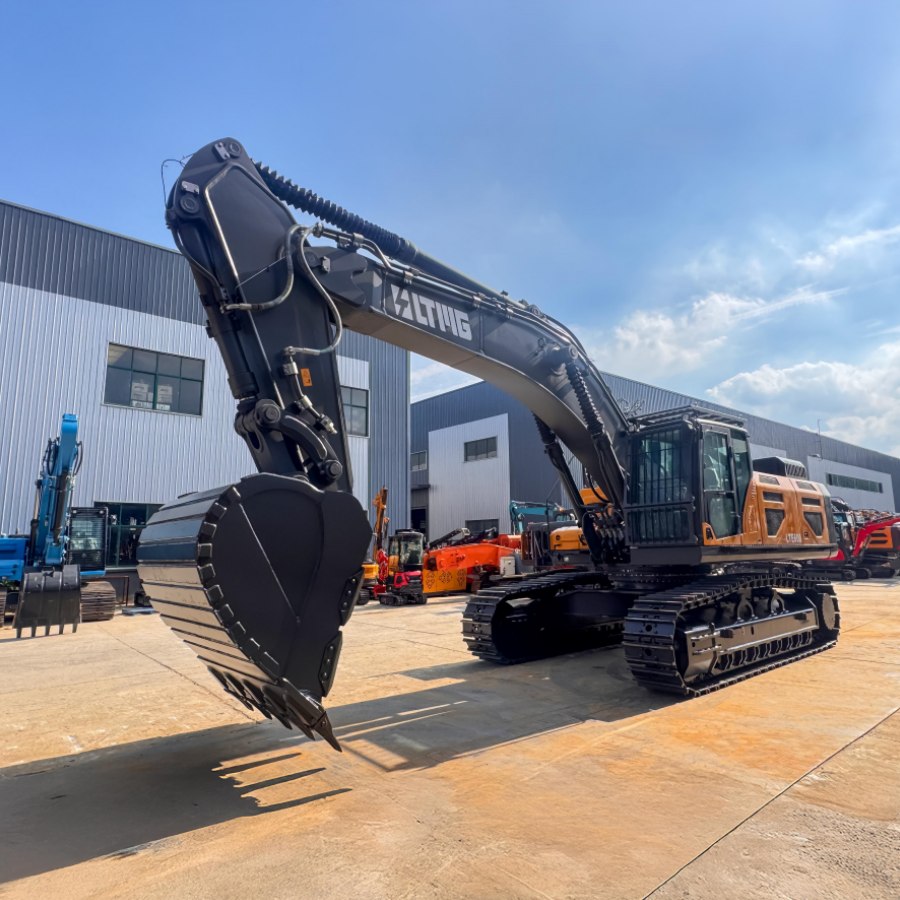
Guía de selección de excavadoras de orugas: ¿Cómo elegir el tamaño de excavadora adecuado para su proyecto?
May 21, 2026
En los proyectos de construcción, comprender los tipos de excavadoras es fundamental antes de seleccionar la excavadora de orugas adecuada. La selección no se basa en un solo parámetro, sino que requiere una evaluación integral de la envergadura del proyecto, la intensidad del trabajo y la eficiencia operativa. Los diferentes tamaños de máquinas varían significativamente en estabilidad, capacidad de excavación y rendimiento de trabajo continuo, lo que repercute directamente en los resultados de la construcción y la rentabilidad.Basándose en aplicaciones de ingeniería reales, LTMG clasifica las excavadoras de orugas en cuatro categorías principales de tonelaje, que abarcan desde modelos compactos hasta grandes máquinas de construcción, lo que ayuda a los usuarios a encontrar el equipo adecuado de forma más intuitiva.Parámetros técnicos básicos de una excavadora de orugasAl seleccionar una excavadora de orugas, la clasificación de tonelaje viene determinada por varios parámetros técnicos clave. Estos factores influyen directamente en el rendimiento, la eficiencia y el ámbito de aplicación.Peso operativoEl peso operativo se refiere al peso total de la excavadora en condiciones de trabajo estándar. Este determina la estabilidad y la capacidad de carga de la máquina. En general, cuanto mayor sea el peso operativo, más estable será la excavadora en condiciones de trabajo exigentes.Potencia del motorLa potencia del motor define la energía que produce el sistema eléctrico de la excavadora, y se suele medir en kW o CV. Afecta directamente a la eficiencia bajo carga y determina si la máquina puede mantener un rendimiento estable durante largas jornadas de trabajo.Capacidad del cuboLa capacidad de la cuchara se refiere al volumen de material que la cuchara de la excavadora puede manejar en un solo ciclo, medido en metros cúbicos (m³). Es uno de los indicadores de productividad más importantes en las especificaciones de las excavadoras. Las cucharas más grandes aumentan la eficiencia, pero requieren mayor soporte estructural y potencia del motor.EspecificaciónExcavadora de orugas de 1,5 a 7,5 toneladasExcavadora de orugas de 23 a 38 toneladasPeso operativo1.500 kg-7.500 kg23.000 kg - 38.000 kgCapacidad del cubo0,025 m³-0,28 m³1,1 m³–1,9 m³Potencia/velocidad nominal10,2 kW/2500 rpm-42,2 kW/2000 rpm124 kW / 2050 rpm - 219 kW / 1900 rpmImagen del productoA partir de la comparación de parámetros, queda claro que los diferentes tamaños de excavadoras de orugas no son simplemente un aumento numérico, sino una configuración adaptada a diferentes exigencias de trabajo.El peso operativo está correlacionado positivamente con la capacidad del cucharón. A medida que aumenta el tonelaje, mejoran la resistencia y la estabilidad estructurales, lo que permite una mayor capacidad de la cuchara y una mayor productividad por ciclo.La potencia del motor aumenta con el tonelaje, mientras que la velocidad del motor disminuye. Las excavadoras pequeñas suelen utilizar motores de alta velocidad y baja potencia (por ejemplo, 2500 rpm) para una respuesta más rápida y una mayor flexibilidad, adecuadas para trabajos ligeros y de precisión. Las excavadoras de gran tamaño adoptan motores de baja velocidad y alto par (por ejemplo, 1900 rpm) para garantizar una potencia estable en operaciones continuas y de trabajo pesado. Tipos de excavadoras de orugas y escenarios de aplicaciónMiniexcavadora de orugas (0,8–3,5 T)Una miniexcavadora de orugas se utiliza principalmente en espacios confinados y tareas de excavación ligeras donde el trabajo manual es ineficiente o imposible. También se utiliza ampliamente en excavaciones de espacios reducidos, donde el espacio de trabajo es extremadamente limitado y se requiere una excavación de precisión.Aplicaciones típicas:Obras de construcción estrechas o restringidasExcavaciones poco profundas cerca de estructuras existentesTrabajos de jardinería, agricultura y paisajismo.Limitaciones:Menor eficiencia en suelos densos.No apto para excavaciones a gran escala ni cargas continuas.Por lo tanto, esta gama de tonelaje no corresponde a una máquina de uso general, sino a un equipo tipo herramienta diseñado para reemplazar la mano de obra manual o la maquinaria pequeña en condiciones de trabajo restringidas.Se utiliza habitualmente para el mantenimiento de jardines y para labores agrícolas o frutícolas.En esta etapa, los modelos LTMG de 0,8 a 3,5 toneladas están diseñados para garantizar que puedan "acceder a espacios reducidos y completar tareas básicas de manera eficiente".Excavadora de orugas LTMG de 1,5 toneladasExcavadora de orugas pequeña a mediana (6,5–13,5 T)Esta es la categoría más utilizada en el mercado de las excavadoras.Aplicaciones típicas:excavación de cimientosConstrucción de oleoductos municipalesCiclos de carga y relleno del sueloEn comparación con los modelos mini, esta gama permite un funcionamiento continuo sin caídas frecuentes del rendimiento.Sin embargo, aparecen limitaciones en:Eficiencia de carga a gran escalaExcavación profunda en suelo de alta densidadSe utiliza habitualmente para la construcción de cimientos, obras de ingeniería municipal y trabajos generales de movimiento de tierras, lo que la convierte en uno de los tipos de maquinaria de construcción principales más utilizados.Para los modelos LTMG de 6,5 T a 13,5 T, la prioridad de diseño en este rango es la estabilidad de la salida en lugar del máximo rendimiento en un solo ciclo.Excavadora de orugas de 7,5 toneladasExcavadora de orugas mediana (15–23,5 T)En esta etapa, la máquina pasa de ser una herramienta de uso general a una excavadora orientada a la producción.Aplicaciones típicas:Movimiento de tierras de gran volumenproyectos de construcción industrialExcavación continua a largo plazoLas principales diferencias en comparación con los equipos pequeños y medianos son:Las excavadoras más pequeñas tienen más probabilidades de experimentar fluctuaciones de eficiencia durante el funcionamiento continuo.Este rango de tonelaje puede mantener una eficiencia de ciclo estable.Sin embargo, sus limitaciones incluyen:Menor flexibilidad para operaciones de alta precisión.Maniobrabilidad reducida en espacios confinadosPor lo tanto, la esencia de esta clase radica en intercambiar flexibilidad por productividad a gran escala.Se utiliza habitualmente en la construcción de grandes cimientos, proyectos industriales y tareas continuas de movimiento de tierras, lo que la hace adecuada para operaciones de intensidad media a alta.Los modelos LTMG 15T–23,5T están diseñados para priorizar la estabilidad de la producción en lugar de la adaptabilidad para múltiples propósitos.Excavadora de orugas de 23 toneladasExcavadora de orugas grande (24 toneladas o más)Una excavadora de orugas de gran tamaño está diseñada para lograr la máxima productividad en el movimiento de tierras.Aplicaciones típicas:Operaciones minerasGrandes proyectos de infraestructuraExcavación continua de alta resistenciaVentajas:Capacidad de excavación extremadamente altaFuncionamiento estable de larga duraciónAlta productividad por cicloLimitaciones:Requiere un espacio de trabajo más grande.Menor movilidadRequisitos más exigentes para la preparación del terreno.Por lo tanto, la esencia de esta gama de tonelaje radica en sacrificar la flexibilidad a cambio de una productividad sostenida.Se utiliza habitualmente en minería, movimiento de tierras a gran escala y escenarios de operación continua de alta exigencia, haciendo hincapié en la alta productividad y la producción estable a largo plazo.Los modelos LTMG de 24 toneladas o superiores están diseñados principalmente para proyectos de gran envergadura con exigencias de producción continua. Excavadora de orugas de 60 toneladas ConclusiónLTMG ofrece una gama completa de excavadoras de orugas, desde 0,8 toneladas hasta más de 24 toneladas, que cubren todos los escenarios de construcción principales. Ya sea que necesite una miniexcavadora de orugas para espacios reducidos o un modelo grande para movimiento de tierras pesado, elegir el tamaño adecuado garantiza mayor eficiencia, estabilidad y control de costos.Para obtener especificaciones detalladas o recomendaciones de modelos, LTMG puede ofrecer soluciones a medida en función de los requisitos de su proyecto.Preguntas frecuentes ¿Qué es una oruga en una excavadora?El sistema de orugas de una excavadora se refiere al sistema de tren de rodaje inferior. En comparación con las ruedas, una excavadora de orugas tiene una mayor superficie de contacto con el suelo, lo que mejora la estabilidad y la tracción en terrenos blandos o irregulares como barro, arena y grava. ¿Cuánto cuesta una excavadora de orugas?El costo de un El precio de una excavadora de orugas depende de su tonelaje, configuración, sistema de motor y componentes hidráulicos. Generalmente, los modelos más pequeños son más económicos, mientras que las máquinas más grandes con sistemas de mayor potencia son considerablemente más caras. ¿Cuál es la diferencia entre una excavadora de ruedas y una excavadora de orugas?Una excavadora de ruedas ofrece mayor movilidad y es adecuada para la construcción de carreteras urbanas y traslados frecuentes. En cambio, una excavadora de orugas proporciona mayor estabilidad y es ideal para obras de construcción, movimiento de tierras y terrenos irregulares.